What is Thai massage?
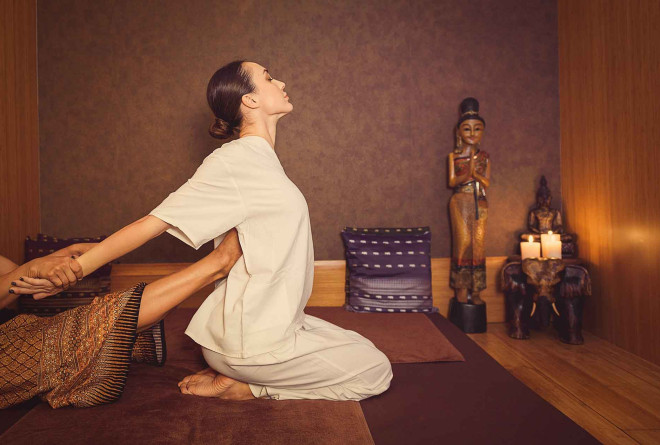
A few things about the history of this particular massage, which is extremely old—specifically, we will go back 25 centuries, to when the Indian healer Jivaka Kumar Baccha (also known as Shiuago Komparaj), friend and personal physician of the Buddha (yes, the well-known one), established it. Its modern form, however, was consolidated a thousand years ago.
In case you didn’t know, it belongs to the same family as Japanese shiatsu massage and is based on the restoration of the smooth flow of bioenergy, as well as on the theory of balancing energies.
Here, we are dealing with careful pressure and muscular stretches, and it has all the benefits that the practice of yoga offers (as far as the body is concerned). And in case you haven’t realized it yet, in Thai massage you feel pain—you don’t relax. You won’t die from the pain, of course, but don’t imagine that someone will simply be rubbing your back.
The benefits:
- flexibility and elasticity
- significantly reduces the risk of injuries
- brings balance between opposing muscle groups, with the immediate result of improved athletic performance and posture
- releases the emotional and mental tension that accumulates in the body
- relieves pain
- treats headaches, constipation, back pain, skin conditions
- offers pleasure
- provides a sense of calm, comfort, energy, and well-being
SIMILAR ARTICLES

A head massage makes you feel better. In addition to the sensory pleasure it offers, a massage can r...
What we once considered a luxury is in fact an extremely useful tool for those who train intensely. ...