Spinal health
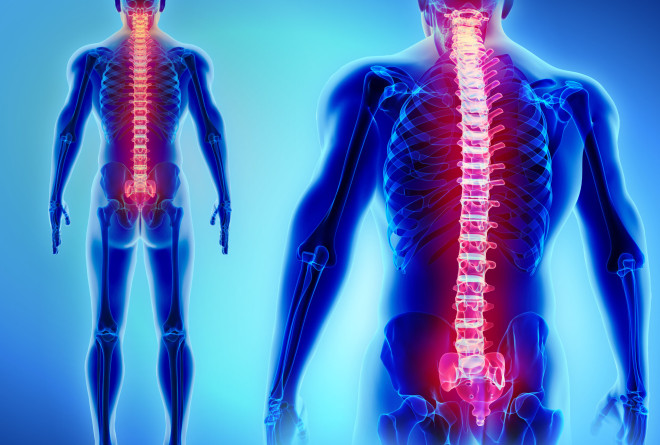
The spine supports your entire body. If you do not take proper care of it at a young age, you may later find yourself facing problems that you will have to live with for the rest of your life. Painful problems that will make every movement difficult and complicate your daily life. So isn’t it worth acting preventively, as much as you can, in order to remain healthy and full of vitality well into old age? See what you can do…
Follow ten simple tips to maintain a strong spine into old age:
1. Proper posture of the head and body when standing, sitting, and walking. Walk and stand with your back straight, without leaning forward or to one side. Likewise, when sitting, the base of the spine should reach the back of the seat so that the entire back rests straight against it.
2. Exercise from childhood by strengthening the back and abdominal muscles. Running is not always beneficial, because the vibrations “irritate” the mechanisms of bone remodeling. On the other hand, weight training increases muscle mass, which supports the bones.
3. Proper nutrition with sufficient calcium, vitamin D, and above all magnesium. Calcium “builds” strong bones, vitamin D contributes to better absorption of calcium, and magnesium keeps all functions related to the above in balance.
4. Caution when lifting weights. When lifting weights while standing, always bend your legs. It is best to avoid lifting heavy objects.
5. Immediate management of problems observed in childhood. A preschool-aged child should ideally have a preventive visit to an orthopedist once before starting school. If any abnormality is diagnosed (lordosis, kyphosis, scoliosis), it should be treated by adolescence in order to avoid chronic pain in adult life.
6. Avoidance of injuries and proper management when they occur. Take care to avoid frequent falls, but if this does happen, strictly follow the orthopedist’s instructions.
7. Maintaining a healthy body weight.
8. Prevention and early treatment of osteoporosis, especially in women after menopause, but also in elderly men. Follow all of the above until the age of 50, and then undergo regular bone density measurements. Women reach their peak bone mass by the age of 25–26. Movement is very beneficial, as it has been found that vibration helps create bone mass. Moreover, excessive consumption of tea, coffee, tobacco, or alcohol damages the bone cells responsible for their repair. Finally, the use of antidepressant medications contributes to the development of osteoporosis.
9. Management of Cervical Syndrome. The cervical spine normally has a curve, a local lordosis, which supports the weight of the head. However, the great freedom of head movement and the daily strain placed on it at work make the cervical region prone to injuries, resulting in the loss of this valuable lordosis. An X-ray or an MRI can reveal any existing problems. Anatomical pillows and positioning the computer screen at eye level help most people.
10. Low back pain–Sciatica. Approximately 60% of the populations of the Western world suffer at some point in their lives from lower back pain. Middle-aged individuals are more commonly affected. Lower back pain is the second leading cause of lost workdays. This could be avoided if we exercised from a young age, maintained a low body weight, and paid basic attention to our posture.
Finally, beyond medical advice, trust also in the contribution of a good therapist who, through manipulations and massage, will restore the spine’s natural mobility.
SIMILAR ARTICLES

Tips for managing stressful situations You may be surprised to learn that biological stress is a rel...

Therapeutic massage comes in different types, and all of them are divided into subcategories. Howeve...